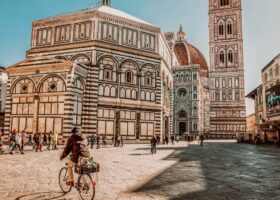
Italy is the trip of a lifetime, but figuring out where to go, what to see, and how to fit it all in? That’s where things get tricky. Don’t worry—this guide has everything you need to plan an unforgettable Italian adventure, from must-see sights to insider tips that make your trip smooth and stress-free.
We are The Tour Guy, and we’ve helped thousands of travelers explore Italy. This is your ultimate cheat sheet for planning a trip to Italy.
Step-by-Step Guide to Planning an Italy Trip
We’ve mapped out the best steps to plan a trip to Italy. Click on the link to jump to the section.
From the rolling hills of Tuscany to the sun-soaked Amalfi Coast and the snow-capped Dolomites, Italy offers a feast for the senses. The challenge? Deciding where to start.
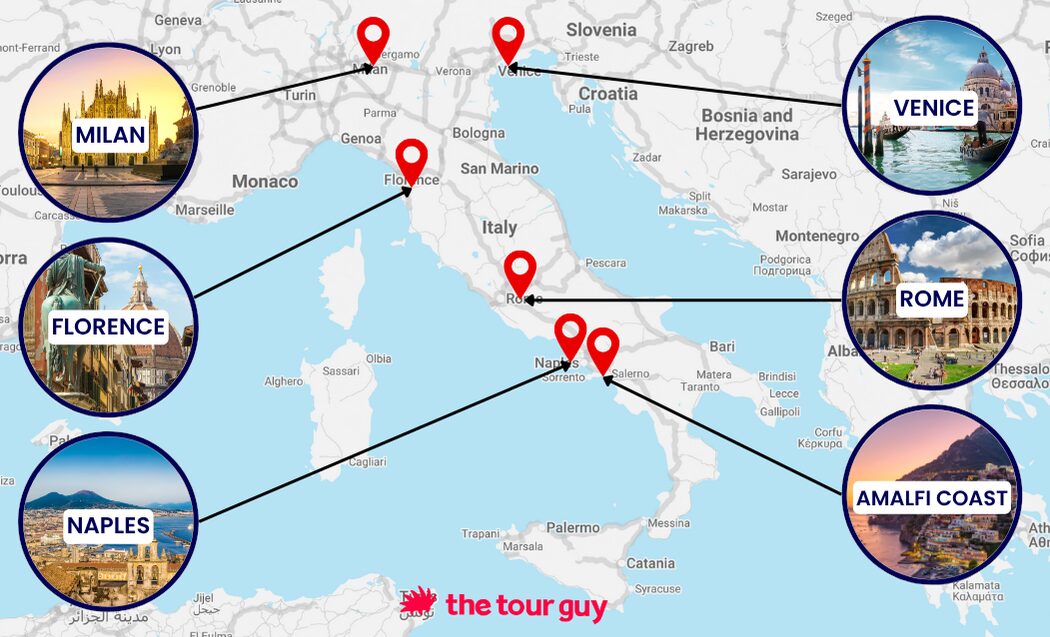
For first-timers, we suggest spending three to four days in Rome to soak in its ancient history, then adding a stop in Florence for Renaissance art or Venice for its iconic canals. Beach lovers will adore the Amalfi Coast, while foodies can’t miss Bologna or Modena for culinary delights.
Rome: Walk through history with visits to the Colosseum, Roman Forum, and Vatican City. Spend at least 3 days to take it all in.
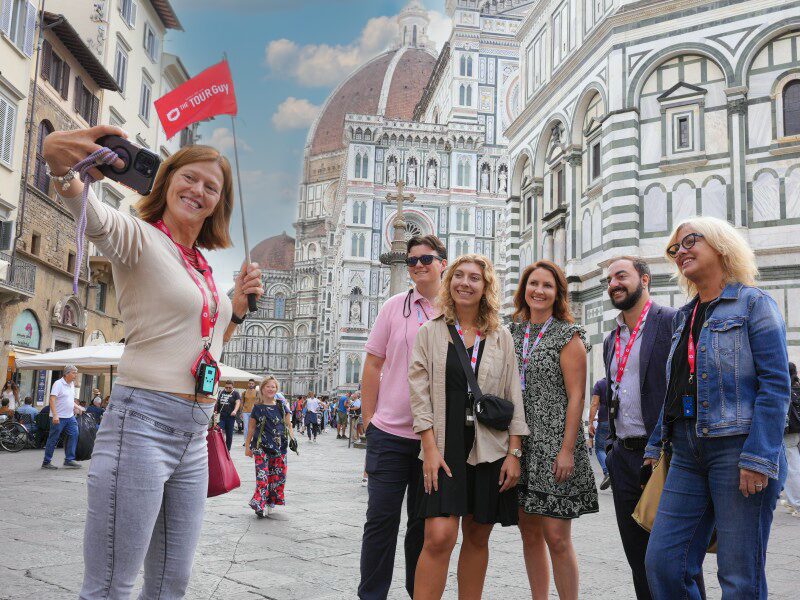
Florence: The heart of the Renaissance and home to Michelangelo’s David, the Uffizi Gallery, and the Duomo. A 2-3 day stay is ideal for art and culture lovers.
Venice: A city like no other, with gondola rides, St. Mark’s Basilica, and hidden canals. Two days is ideal.
Best add-on trips from Rome, Florence, or Venice:
Vineyard lunch in Tuscany
Tuscany: Rolling hills, medieval towns like Siena and San Gimignano, and world-class wine in Chianti.
Amalfi Coast: Stunning coastal views, pastel villages like Positano, and fresh seafood.
Cinque Terre: Five colorful cliffside villages connected by hiking trails and scenic train rides.
Top places to visit in Northern Italy:
Photo courtesy of Lake Como Cruise
Milan: A fashion and design hub with the Duomo and Da Vinci’s Last Supper.
Lake Como: Relax in Bellagio or Varenna, with stunning lake and mountain views.
Verona: The romantic setting of Shakespeare’s Romeo and Juliet and home to a Roman amphitheater.
Top places to visit in Southern Italy:
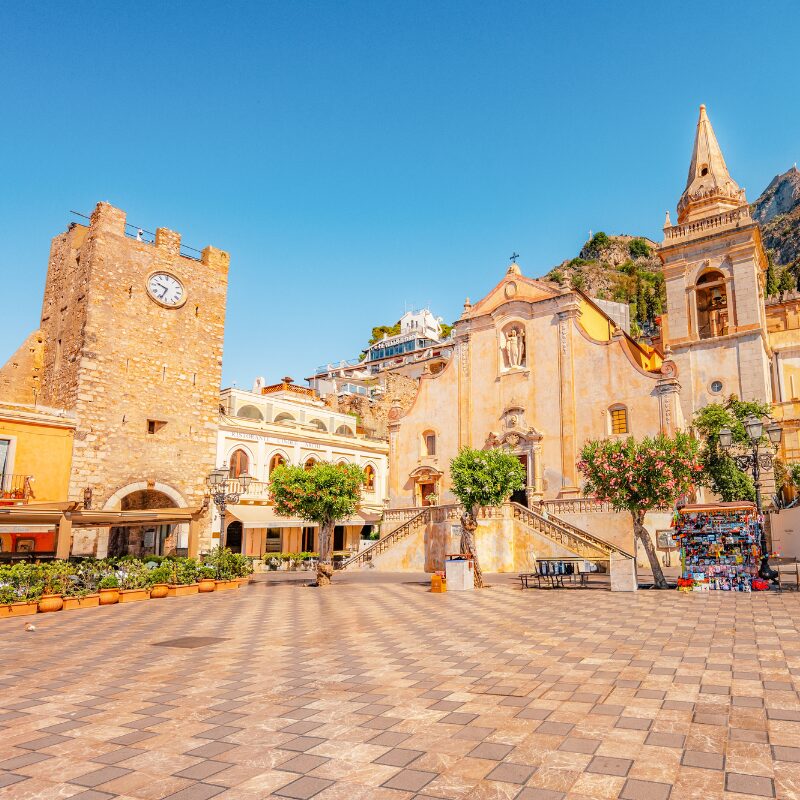
Taormina, Sicily
Naples: The birthplace of pizza and a gateway to Pompeii and the Amalfi Coast.
Sicily: Explore Palermo’s street markets, Taormina’s Greek theater, and the beaches of San Vito lo Capo.
Puglia: Known for its whitewashed towns, olive groves, and unique trulli houses in Alberobello.
Step 2: Choose When to Visit Italy
The next step in planning your Italy trip is deciding when to go. While summer is the most popular, each season offers its own unique charm.
Spring (April–June): Mild temperatures and blooming landscapes make this the ideal time to visit. Wander through Florence without the summer crowds or take a scenic drive through Tuscany’s vineyards.
Summer (July–August): Italy’s high season is all about energy—beaches are buzzing, festivals are in full swing, and cities are alive with tourists. Just be ready for heat and long lines at major attractions.
Fall (September–October): A favorite for foodies, fall is harvest season for wine and truffles. The weather is still pleasant, and destinations like the Amalfi Coast and Sicily are quieter.
Winter (November–March): Experience Italy’s cultural side with fewer tourists. Visit Venice during Carnival, ski in the Dolomites, or enjoy Rome’s historic sites without the crowds.
Step 3: Decide How Many Days to Spend in Italy
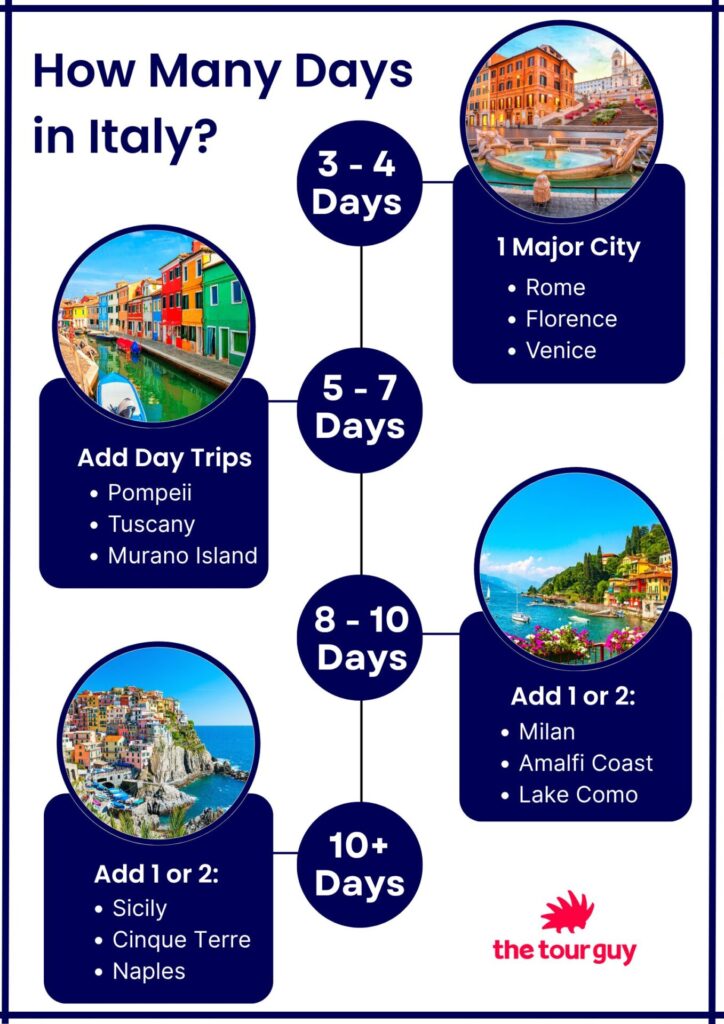
The more time you can spend in Italy, the better—there’s so much to see and do! But your itinerary will depend on your vacation days and budget. Ideally, aim for at least one to two weeks to fully experience the country. Here’s a breakdown of what you can do with your time:
3–4 days: Focus on one major city, like Rome, Florence, or Venice. Explore the highlights, such as the Colosseum, the Uffizi Gallery, or St. Mark’s Basilica, and enjoy the local cuisine.
5–7 days: Combine one major city with a nearby region. For example, pair Rome with a day trip to Tivoli or Florence with a visit to Tuscany’s hill towns.
8–10 days: See two or three cities or regions. Start in Rome, then head to Florence and the Amalfi Coast, or explore Venice, Milan, and Lake Como.
10+ days: With ten or more days, you can dive deeper into Italy’s diverse regions. Visit Rome, Florence, and Venice, then add Tuscany, the Amalfi Coast, or Sicily for a mix of history, culture, and relaxation.
Step 4: Create Your Italy Itinerary
Planning your Italy itinerary is all about balancing iconic sights with time to soak in the local culture. Below are some sample itineraries to help you get started:
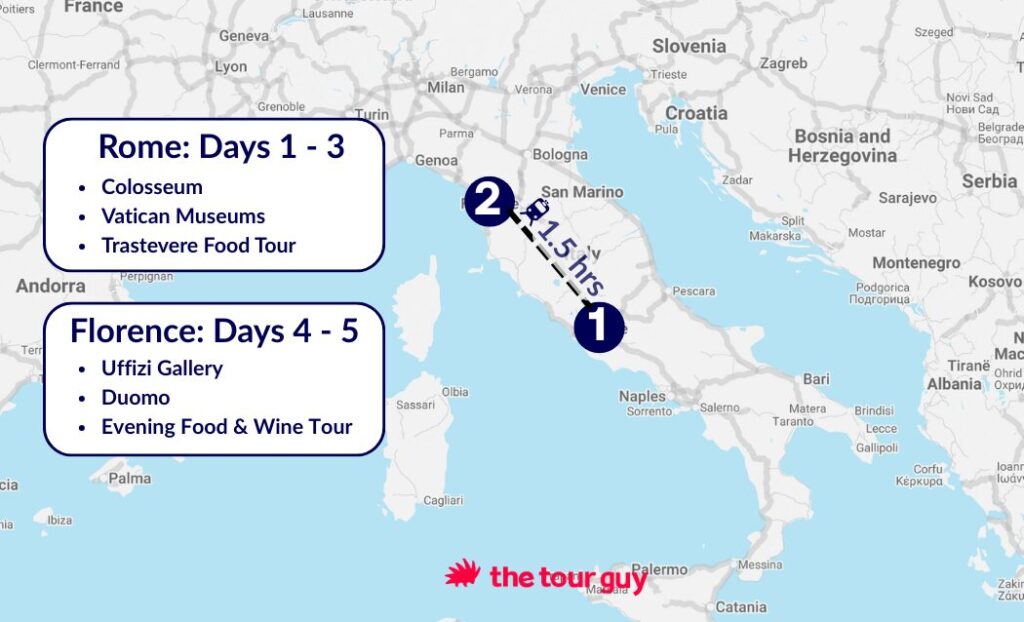
5-Day Italy Itinerary:
For a short but unforgettable trip, focus on two of Italy’s most iconic cities. Start with three days in Rome, where you’ll walk in the footsteps of emperors at the Colosseum, admire the art of the Vatican Museums, and enjoy gelato by the Trevi Fountain. Then, take a train to Florence for two days of Renaissance splendor. Visit the Uffizi Gallery, climb the Duomo, and enjoy a leisurely evening in a Tuscan wine bar.
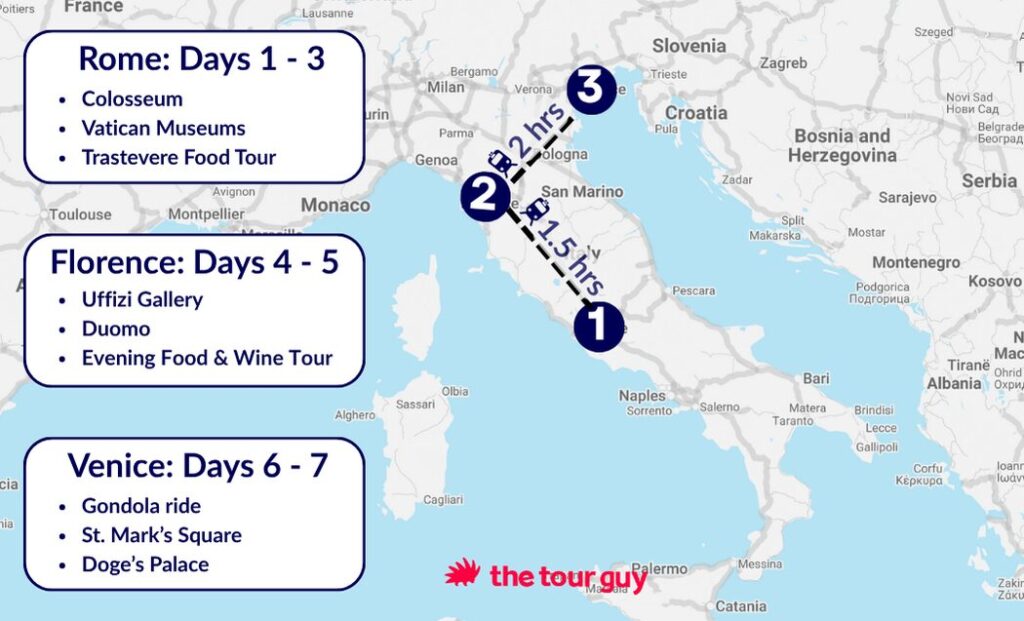
7-Day Italy Itinerary:
Turn your 5-day Italy trip into a week by adding Venice to the mix. Spend three days in Rome, then take a quick train ride to Florence for two days of art, history, and incredible food. Wrap it all up with two dreamy days in Venice, exploring canals by gondola, St. Mark’s Basilica, and the Doge’s Palace, all just a train ride from Florence.
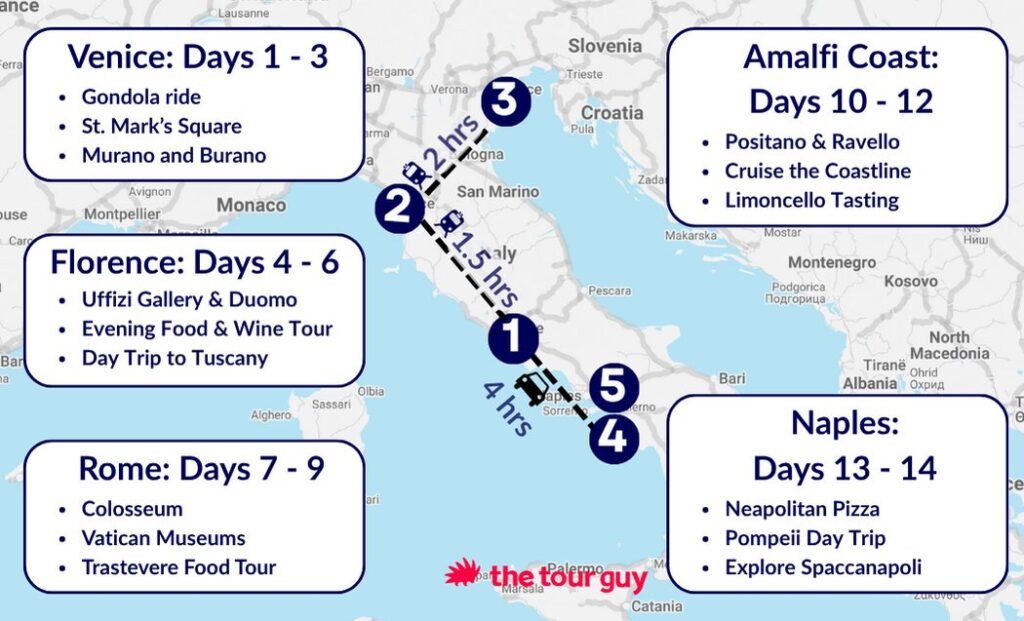
2-Week Italy Itinerary:
This two-week Italy itinerary is the perfect mix of iconic cities and stunning coastal escapes. Start in Venice with three days of gondola rides, romantic canals, and visits to nearby islands like Murano. Then, take a train to Florence for three days of Renaissance masterpieces, Tuscan flavors, and day trips to charming hill towns.
Next, spend three days in Rome, where you’ll walk through history at the Colosseum, toss a coin into the Trevi Fountain, and enjoy late-night gelato in lively piazzas. From there, take a private transfer to the Amalfi Coast for three days of breathtaking views, pastel-colored villages, and relaxing boat rides. End your trip with two days in Naples, indulging in world-famous pizza and exploring nearby Pompeii or Capri.
Step 5: Book Travel & Tours
With your itinerary set, it’s time to reserve what sells out first: trains and top tours. Do these now, and you can relax in cafés and museums later.
Train Travel in France
Why trains: They’re usually faster than driving between major cities. You’ll also skip airport security and transfers, and most stations sit right in the city center, making arrivals and departures simple.
Where to book: We recommend booking through Trainline to see all your options in one place.
When to book: As soon as your dates are set. The best fares often appear months out.
A big part of planning a visit to Italy is deciding which neighborhoods and regions will feel like “home” during your trip. Here’s where to stay, depending on your focus:
Positano: Perfect for beach lovers and nightlife seekers, with stunning cliffside scenery.
Ravello: A romantic retreat, known for its elegant villas, gardens, and quiet charm.
Amalfi Town: Central and lively, with flat streets, historic landmarks, and ferry connections.
Maiori & Minori: Great for families and budget travelers, with spacious hotels and long sandy beaches.
Other Cities & Regions:
Naples: Grab a hotel in the historic center to be steps from ancient ruins, buzzing piazzas, and the best pizza you’ll ever eat.
Cinque Terre: Stay in Vernazza for colorful harbor views, cozy cafés, and easy access to the hiking trails.
Milan: Book a spot near the Duomo to soak up the city’s history, fashion, and iconic sights all in one place.
Lake Como: Pick Bellagio for jaw-dropping lake views, elegant villas, and a touch of Italian luxury.
Step 7: Find Great Places to Eat in Italy (Before You Arrive!)
Let’s be real—half the reason you’re going to Italy is for the food. So why risk a bad meal? Whether it’s a cozy trattoria in Tuscany, a seafood feast on the Amalfi Coast, or the perfect pizza in Naples, knowing where to eat can take your trip from good to unforgettable. Pin your must-try spots, book a few special dinners, and leave room for spontaneous gelato breaks.
Need help? We’ve mapped out the best restaurants in every destination so you can focus on eating, not Googling.
Travel Insurance: It’s not glamorous, but it’s a lifesaver if something goes wrong.
Cash & Cards: Make sure your bank knows you’re traveling and plan to use ATMs for the best exchange rates.
Language Prep: Learn a few key Italian phrases (ciao, grazie) and download Google Translate.
Packing List: Don’t forget comfy shoes for cobblestones, a reusable water bottle, and room in your suitcase for souvenirs.
Travel Tip: Think of a private airport transfer as a gift to your future self. When you land tired and disoriented, you’ll be so glad it’s taken care of.
Extra Tips for Visiting Italy Like a Local
Your trip is planned, but these tips will help you avoid tourist traps and enjoy Italy like a true insider:
Dinner is an event: Italians eat late and take their time. Don’t rush—dinner is meant to be savored, not scarfed.
Driving? Beware the ZTL: Restricted traffic zones in cities are camera-monitored, and fines will find you—even months later.
Carry small bills: Many places, especially in rural areas, don’t take cards or break large bills. Keep €5s and €10s handy.
Coffee culture: Skip the fancy drinks after breakfast. A simple espresso or macchiato is the way to go.
Restroom strategy: Public restrooms are rare, so use the facilities at bars or restaurants when you can.
Shop smart: Markets and small shops often close midday for a few hours, so plan your shopping in the morning or late afternoon.
How to Plan a Trip to Italy FAQs
What’s the first step in planning a trip to Italy?
Start by deciding which regions or cities you want to visit—Rome, Florence, Venice, or the Amalfi Coast are popular for first-timers. Once you’ve picked your destinations, you can plan your itinerary, book trains, and reserve accommodations.
When is the best time to visit Italy for first-timers?
The best time to visit Italy is in spring (April–June) or fall (September–October) for pleasant weather and fewer crowds. Summer is great for coastal trips but can be hot and busy, while winter is ideal for skiing in the Alps or exploring cities without the crowds.
How many days do I need when planning a trip to Italy?
For a first trip to Italy, aim for 7–10 days to see Rome, Florence, and Venice. If you only have 3–4 days, focus on one city like Rome or Florence to fully enjoy the experience.
How do I create a good Italy itinerary?
Start with Rome for its history, then add Florence for art and Tuscany’s countryside. Venice is a great third stop for its canals and unique charm. If you have more time, consider adding the Amalfi Coast, Cinque Terre, or Milan.
What’s the best way to get around Italy—train or car?
Trains are the best option for traveling between major cities like Rome, Florence, and Venice. Rent a car if you’re exploring rural areas like Tuscany, Umbria, or the Dolomites, where public transport is limited.
Which tours and tickets should I book in advance when visiting Italy?
Pre-book tickets for popular attractions like the Colosseum, Vatican Museums, Uffizi Gallery, and Last Supper to skip long lines. Guided tours of Pompeii, Tuscany wine regions, or the Amalfi Coast are also worth reserving ahead of time.
Can I combine Italy with other countries on the same trip?
Yes—Italy pairs well with nearby countries. Take a train to Switzerland or France, or hop on a short flight to Spain or Greece. Rome is also a great starting point for multi-country European itineraries.
What should I pack for a trip to Italy?
Pack comfortable walking shoes for cobblestone streets, layers for changing weather, and a reusable water bottle. Don’t forget a power adapter for Italian outlets and extra space in your suitcase for souvenirs like wine, olive oil, or ceramics.
Where to Go Before & After Italy
When planning a trip to Italy, why not add another iconic European destination to your itinerary? With extra days, you can easily hop to:
Barcelona: Just a short flight from Rome or Milan, Barcelona offers stunning Gaudí architecture, vibrant nightlife, and a food scene that rivals Italy’s.
London: Fly from Venice or Rome to London for a mix of history, culture, and world-class museums. It’s the perfect contrast to Italy’s ancient charm.
Paris: Pair Italy’s romance with the City of Light. A quick flight or train ride from Milan, Paris is ideal for iconic landmarks, chic shopping, and unforgettable dining.
Final Thoughts On Planning Your Italy Vacation
Now you’re ready to plan the Italian adventure of your dreams! Stick to these steps, leave some time for wandering cobblestone streets, and don’t forget to eat your weight in pasta and gelato. Italy is all about the big sights and the little moments—soak it all in. Buon viaggio!