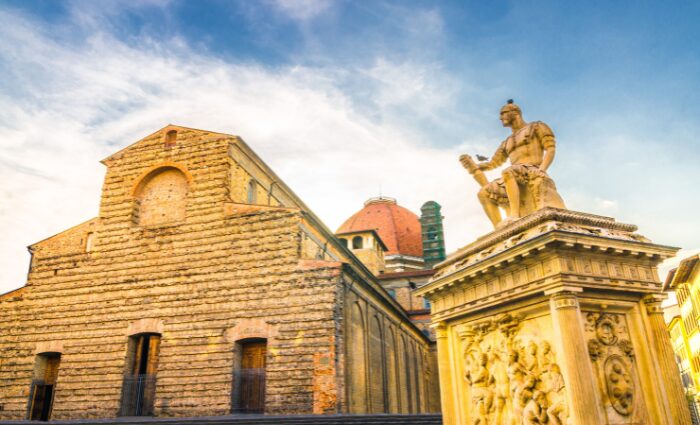
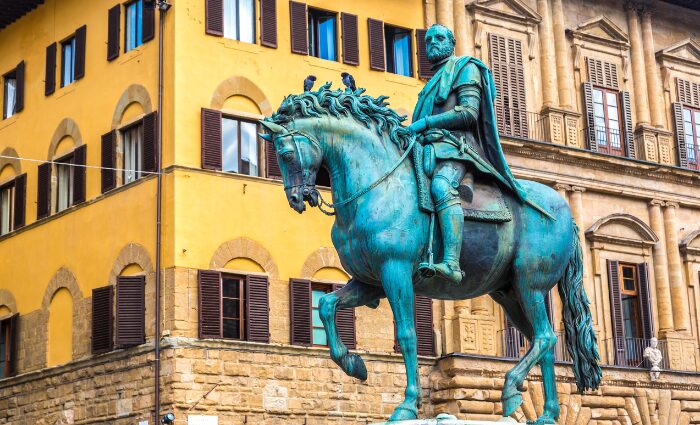
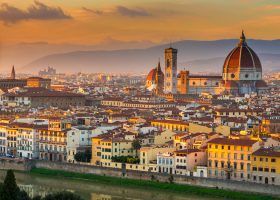
The Medici family didn’t just bankroll the Renaissance—they were the Renaissance. For over 300 years, this single Florentine family was the most influential dynasty in Europe. They used money, political maneuvering, and a serious love for art to reshape the world as we know it. This guide cuts through the legend to show you exactly how the rise of the Medici changed art, politics, and power forever.
Before we jump into the timeline of the Medici, let’s set the scene:
They were filthy rich—controlling money across Europe.
By financing papal loans, they controlled the Vatican’s purse strings.
Started as bankers, but became power brokers and art patrons.
Funded the Renaissance by backing artists like Brunelleschi, Leonardo da Vinci, and Michelangelo.
At their peak, they weren’t just financiers—they were the de facto rulers of Florence.
For a thousand years after Rome fell, Europe lived in the “age of faith.” Then, minds cracked open, new ideas flowed, and the Medici paid for much of it. The rise, reign, and fall of the Medici are synonymous with the Renaissance.
A Timeline of the Medici
The story of the Medici is a multi-generational saga of ambition, genius, and betrayal. We’ll break down the key players who built the dynasty and trace its path from its humble beginnings to its ultimate decline, all within the context of the greater world they were busy changing. For even more intrigue, check out these facts about the Medici.
Life Before the Medici
Before the Medici rose to power, Italy was a messy patchwork of city-states, and Florence was one of the most powerful. While the early Renaissance was brewing, life was tough for the average Florentine, and the world was a very different place.
The World was at War. As the Medici began their ascent, England and France were in the midst of the 100 Years’ War, with the legendary Joan of Arc leading the French charge. Meanwhile, in China, the Ming Dynasty was flourishing in total isolation from the West.
A World of Bland Food. For the average person, food was basic and bland. Stews and simple gruel were staples, with meat reserved for holidays. The rich, however, were already enjoying lavish feasts with exotic imports like almonds and spices.
The Pantheon was a Mystery. The great Roman structures, like the Pantheon in Rome, still stood, but the knowledge of how they were built had been lost. No one knew how to build a dome like that again—at least, not yet.
Giovanni di Bicci (1360–1429)
He was the pragmatic, cautious patriarch who founded the Medici dynasty. Giovanni wasn’t noble, but he was brilliant. He started the Medici Bank in 1397 and quickly learned that money, not a title, was the key to power.
He managed the finances for the Pope, a deal that guaranteed the bank a steady stream of income and massive influence.
He used a cautious, behind-the-scenes approach, understanding that overt power was a dangerous game.
He pioneered a new banking system that allowed the Medici to manage transactions across Europe.
His most important move was financing Filippo Brunelleschi’s bid to build the impossible dome for the Florence Cathedral.
Why it’s a Big Deal: Giovanni didn’t just build a bank; he built the foundation of a dynasty. By backing the Dome, he single-handedly funded the architectural triumph that would kick-start the Renaissance and put Florence—and the Medici—on the map forever.
Cosimo il Vecchio (1389–1464)
After his father’s death, Cosimo inherited the largest fortune in Florence. He was more ambitious than his father, but just as pragmatic, and he was a master of ruling from the shadows, earning him the title Pater Patriae (“Father of the Fatherland”).
He used his immense wealth and a vast patronage network to manipulate the Florentine government from behind the scenes.
He was exiled by rivals in 1433, but his return a year later was so popular he became the unofficial ruler of Florence.
He became a great patron of the arts, commissioning masterpieces from artists like Donatello and Fra Angelico.
He was a brilliant strategist, even making a deal with the Ottoman Sultan Mehmed II when the rest of Europe wanted to fight him. This secured Florentine economic interests for years.
Why it’s a Big Deal: Cosimo turned his father’s financial empire into a political one. He set the tone for the entire dynasty: a mix of careful generosity and ruthless political maneuvering that made the Medici the true rulers of Florence.
Piero the Gouty (1416–1469)
Cosimo’s son, Piero, was given the nickname “the Gouty” because of his chronic illness. Despite his poor health, he managed to continue his father’s work, consolidating power and defending the family’s legacy against their rivals.
He maintained the family’s political network, ensuring that their influence remained strong after his father’s death.
He foiled a plot by rival families to overthrow the Medici, proving he was a worthy successor to Cosimo.
He continued his father’s tradition of art patronage, even commissioning a work from Botticelli.
His reign was short but crucial. He kept the dynasty intact for five years, bridging the gap between two of its most brilliant leaders.
Why it’s a Big Deal: Piero proved that the Medici dynasty could survive even without a visionary leader at the helm. He preserved the family’s power at a critical moment, making way for the most famous Medici of all.
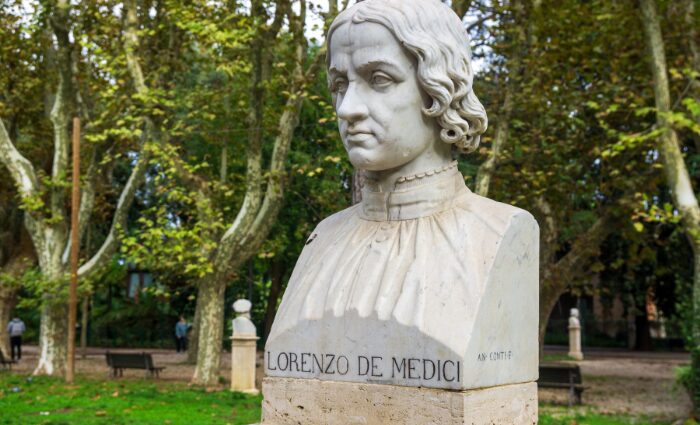
Lorenzo the Magnificent (1449–1492)
Lorenzo was the face of the Florentine Renaissance. He was a gifted diplomat, a poet, and a scholar who was groomed from a young age to rule. His passion for art and philosophy helped usher in the golden age of Florence, but his lack of business sense also led to the decline of the Medici Bank.
He discovered and patronized a new generation of artistic geniuses, including Botticelli, Leonardo da Vinci, and Michelangelo.
His life almost ended during the Pazzi Conspiracy in 1478, an assassination plot by a rival banking family and sanctioned by the Pope. His brother, Giuliano, was killed, but Lorenzo survived.
He had a monopoly over trade in the city, controlling everything from wool and silk to spices and luxuries.
Unlike his grandfather, Cosimo, Lorenzo was a very public figure who relished his power and lived a lavish lifestyle.
He wasn’t as good at banking as his predecessors, and under his rule, the family’s financial empire began to crumble.
Why it’s a Big Deal: Lorenzo was the personification of the Renaissance. He was the brilliant, extravagant, and sometimes ruthless patron who shaped art history and led Florence to its cultural peak.
Learn About the Life and Masterpieces of Michelangelo
Lorenzo’s son, Piero, was a stark contrast to his brilliant father. His arrogance and political miscalculations led to the collapse of the Medici bank and the family’s first exile from Florence.
He was a weak and indecisive leader who alienated his allies and angered his people.
In 1494, he surrendered Florence to the French army without a fight, earning him the nickname “the Unfortunate.”
The Medici were exiled from Florence for 18 years, marking the end of the dynasty’s first major period of rule.
While the Medici were gone, Florence was plunged into chaos, with a Dominican friar named Savonarola leading a period of book burnings and a return to religious extremism.
Why it’s a Big Deal: Piero’s incompetence proved that without strong leadership, the Medici’s power was nothing more than a house of cards. His exile ushered in a period of chaos that erased much of his family’s cultural legacy.
Pope Leo X (1475–1521) and Pope Clement VII (1478–1534)
The Medici returned to Florence with the help of the Spanish, and in the 16th century, they found a new way to consolidate power: by putting their family members on the papal throne. Lorenzo’s son Giovanni became Pope Leo X in 1513, and his cousin Giulio became Pope Clement VII.
Pope Leo X was a lavish patron of the arts, but his spending bankrupted the Vatican. His reliance on selling “indulgences” (forgiveness for sins) to fund projects directly contributed to the Protestant Reformation.
Pope Clement VII was an indecisive leader. His poor political calculations led to the catastrophic Sack of Rome in 1527 by Holy Roman Emperor Charles V, a disaster that many saw as divine punishment.
Their lavish lifestyles and political missteps during a time of intense religious upheaval threw a major wrench into the progress of the Renaissance.
Why it’s a Big Deal: The Medici popes were a sign of the dynasty’s shifting priorities. While their predecessors used money for power and art, the later Medici used their power to live lavishly, a shortsightedness that would ultimately contribute to the family’s decline.
The Decline of the Medici
The golden age of the Medici was over, and the family’s political influence began to wane. By the 17th century, the family had become a series of rulers with dwindling power and a focus on keeping their name relevant through marriage and alliances.
In 1532, Florence became a monarchy, with Alessandro de’ Medici becoming its first duke, a far cry from the subtle, behind-the-scenes control of Cosimo.
In 1533, Lorenzo II’s daughter, Catherine de’ Medici, married the future King Henry II of France, a strategic move that made her the Queen of France and brought Florentine culture to the French court.
The family’s money had long been dwindling, and they were no longer the financial force they once were. They focused on maintaining their dukedom in Florence and their place among European royalty.
On July 9, 1737, Gian Gastone de’ Medici, the last male heir, died without a successor. This marked the end of the Medici family tree. He donated the family’s vast collection of art and treasure to the state of Tuscany.
Why it’s a Big Deal: The death of the last male Medici marked the end of the most powerful dynasty of the Renaissance. But by donating their entire collection to the state, they ensured their legacy would live on in Florence’s history, immortalizing their love for art and their transformative impact on the world.
Guided Tours: Experience the Medici’s Florence
Want to see the places where the Medici made history? The best way to learn about the Medici is by exploring the city of Florence with an expert guide who can bring the history to life.
The Medici weren’t just rich—they rewrote what money could buy. They bankrolled the Renaissance, shaped European politics, and turned Florence into a cultural capital. Their dynasty eventually collapsed, but their legacy is still etched into the art, architecture, and ideas of the modern world.
Planning a trip to Florence? Check out these resources: