On October 12, 2025, Europe rolled out a new digital border control system called EES (Entry/Exit System). If you’re visiting the Schengen Zone (for tourism or short stays up to 90 days), your passport stamps are being replaced with a biometric record. This guide walks you through exactly how it works, what changes on your next trip, and practical tips to make your border crossing smoother.
We are The Tour Guy, and we’ve helped thousands of travelers explore Europe. This is your ultimate cheat sheet for one of the most important steps—navigating the new Europe EES.
New EU Border Rules Explained for US, UK & Canada Travelers
Europe EES Quick Guide: What It Is & Why It Exists
- What it is: A digital border control for non-EU visitors to the Schengen Zone.
- What it does: Logs your entry and exit automatically (no ink stamp), using biometrics (live photo + four fingerprints on your first trip).
- Why it matters: The system enforces the 90/180-day rule and speeds up repeat entries once you’re registered.
- When it started: October 12, 2025, with a soft-launch transition through April 10, 2026.
- Where to get the latest information and help: Visit the official website of the European Union.
Who’s Affected By the Europe EES (and Who Isn’t)

You’re in EES if…
- You hold a U.S., Canadian, or U.K. passport (plus most other non-EU passports).
- You’re visiting for a short stay—up to 90 days in any 180-day period.
You’re not in EES if…
- You’re a citizen of an EU or Schengen country.
- You hold a long-stay visa or residence permit for an EU/Schengen country.
A note on kids and the EES
- Under 12: No fingerprints. Still expect a passport scan and a live photo.
- 12 and up: Photo + four fingerprints on the first entry after EES starts.
What Actually Happens at the Border (Step-by-Step)
Your first EES trip (registration)

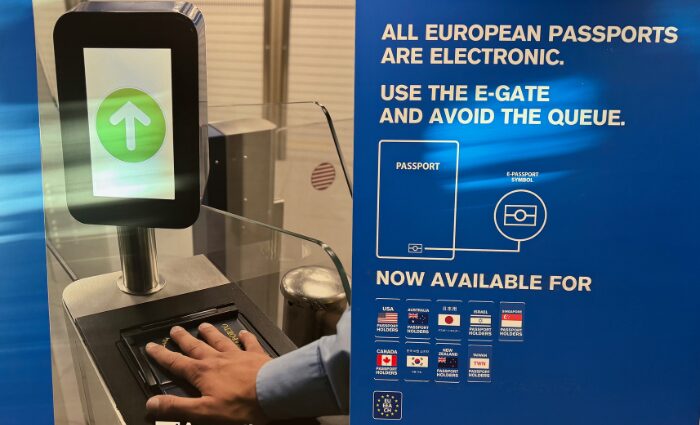
- Show your passport at a kiosk or border control booth.
- The kiosk or officer will read your passport information (name, nationality, travel document number, etc.).
- A live photo (facial image) is taken.
- You’ll place four fingers (two on each hand, or otherwise specified) on a fingerprint scanner.
- The system logs your entry into the EES—no ink stamp, just a digital record.
On Departure (Leaving the Schengen Area)
- The system records your exit digitally.
- Because everything is tracked, there’s no physical exit stamp (or at least, it’s not the official record).
On Return Visits (Within Valid Stay Period)
Once your data is registered, subsequent trips should be much quicker. The system will recognize your passport and match it with the biometrics already stored. You will often only need a photo check or a simple scan, making repeat entries more efficient than the first.
Heads up: For your first time under EES, expect it to take longer than a typical passport control. Be prepared for extra processing time.
What This Means for Your Europe Trip in 2025–2026
Expect delays at first
- Rollout won’t be perfectly smooth. Some borders will be ready; others will stall.
- Budget extra time on arrival—especially late 2025 through early 2026.
No “fudging” the 90/180 rule
- EES makes overstays obvious. If you like to “cut it close,” don’t.
- 90/180 explained: You can be in the Schengen Zone up to 90 days total within any rolling 180-day window.
Practical timing advice
- Arrivals: Add 30–60 extra minutes to your normal border-crossing time frame during the soft launch.
- Connections: Avoid tight layovers on your first EES entry.
- Peak times: Morning arrivals tend to come with longer lines. Midday or late-evening flights usually have shorter line.
- Documents handy: To make the process quicker, have your passport ready and remove your hat and sunglasses.
- Traveling to the UK or Venice? You’ll also want to read up on the Venice Access Fee and the UK ETA.
Europe EES & ETIAS (How They Fit Together)
Key dates
- October 12, 2025: EES begins (soft launch).
- Late 2025–Early 2026: Gradual rollout at airports, seaports, and land borders across Schengen.
- April 10, 2026: Target for full EES coverage.
ETIAS integration (what happens later)
- Late 2026: ETIAS (the online travel authorization) is expected to become mandatory.
- How it works together:
- You apply for ETIAS in advance; it’s digitally linked to your passport.
- At the border, EES checks your passport and queries ETIAS to confirm you’re approved.
- Result: a single digital record tying your ETIAS pre-screening, EES biometrics, and entry/exit logs—the end of manual stamping.
- You apply for ETIAS in advance; it’s digitally linked to your passport.
Planning Europe? Check Out These Tours!
Not ready to book a tour? Check out our guides on How to Visit France and How to Visit Italy!
Port-by-Port Readiness Guide (What to Expect Where)

Ready Lanes vs. Legacy Lines
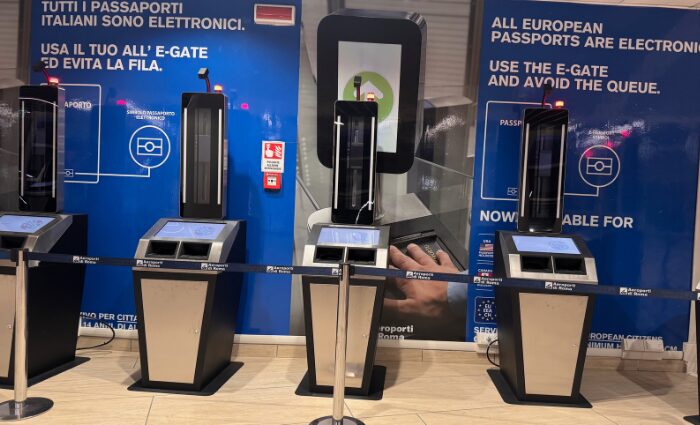
Early self-service kiosks and e-gates create “Ready Lanes” that should move faster—especially for repeat visitors.
Expected smoother rollout (“Ready Lanes”)
- Germany: Düsseldorf from launch, then Frankfurt and Munich in a phased approach designed for stability.
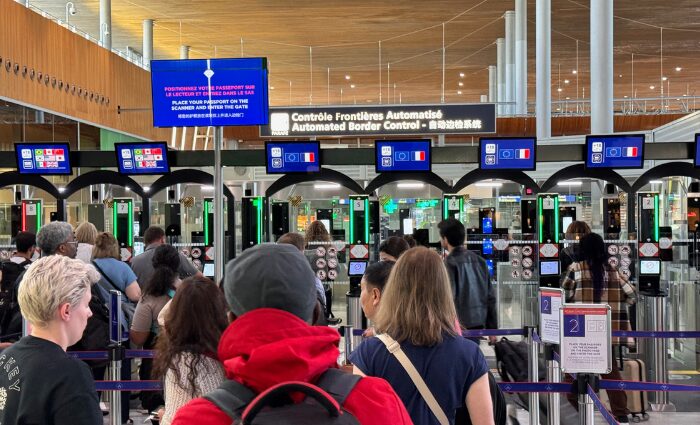
- France: Paris–CDG is a primary launch airport; expect rapid expansion of new e-gates to manage volume.
Higher disruption risk (“Legacy Lines”)
- Athens, Bucharest, Milan Malpensa, Berlin, Vienna, Amsterdam (Schiphol)
- These hubs have high volume + system complexity.
- Plan for longer queues on your first EES entry, especially during the soft launch.
- These hubs have high volume + system complexity.
If you’re stuck in a legacy line
- Arrive earlier than usual and queue calmly—kiosk speed improves after your first registration.
- Have your passport ready (covers off, no holders), remove glasses/hats, and follow signage to any available self-service kiosks.
Land & Sea Border EES
Calais & Dover (Channel ports)
- The challenge: You’ll likely exit your vehicle for biometric capture—this can’t be done through a window.
- Prediction: Until dedicated registration areas are fully operational, expect traffic bottlenecks and longer processing times.
Croatia–Bosnia crossings (example of external Schengen border)
- Land borders that previously relied on manual stamps will need time to adapt to biometric capture.
- Expect slower processing initially versus airports.
Tips for drivers & coach passengers
- Build a bigger cushion into your driving time.
- Look for and follow lane signage. Some posts will separate EES registration from EU/EEA lines.
- Keep passports in hand and be ready to escort minors to registration areas if requested.
The Europe EES Tech Explained
Biometrics by age
- 12 and up: A live facial photo + four fingerprints on your first EES entry.
- Under 12: No fingerprints; still expect a photo and passport scan.
Data security & your rights
- Your data is stored in the central EES (managed by eu-LISA) under strict EU privacy rules.
- Retention: Typically 3 years from your last exit (up to 5 years in certain cases).
- Access: Limited to authorized national authorities (border/visa) and law enforcement for specific purposes.
- Your rights: Under GDPR, you can request access, correct inaccuracies, or request deletion of unlawfully processed data.
If the kiosk or e-gate fails
- Go to a staffed lane right away.
- Any data the kiosk captured (passport read, partial info) is already passed to the officer.
- The officer will finish your registration on their system and, if needed, collect biometrics at the booth.
EES vs. ETIAS
- EES = What happens at the border. It records when you enter/exit and who you are (biometrics).
- ETIAS = What happens before you travel (starting late 2026). An online authorization linked to your passport.
Together: ETIAS pre-screens you; EES registers and tracks your actual entries/exits. Different jobs, linked systems.
Europe EES FAQs
For EES, you don’t need to do anything before you land. Just bring your passport and be ready for photo/fingerprints on first entry.
During the soft launch (Oct 12, 2025 to Apr 10, 2026) you may see both a digital check and a stamp at some posts. After that, expect digital only.
The system knows exactly how long you’ve been in Europe and overstays can trigger fines, entry bans, or future refusals. Know your 90/180.
No. If you need a visa, you still need one. EES just records entries/exits for visa-exempt and visa-required travelers alike.
Yes, they EES applies at Schengen seaports. Expect kiosk/booth checks when you enter or exit the Zone.